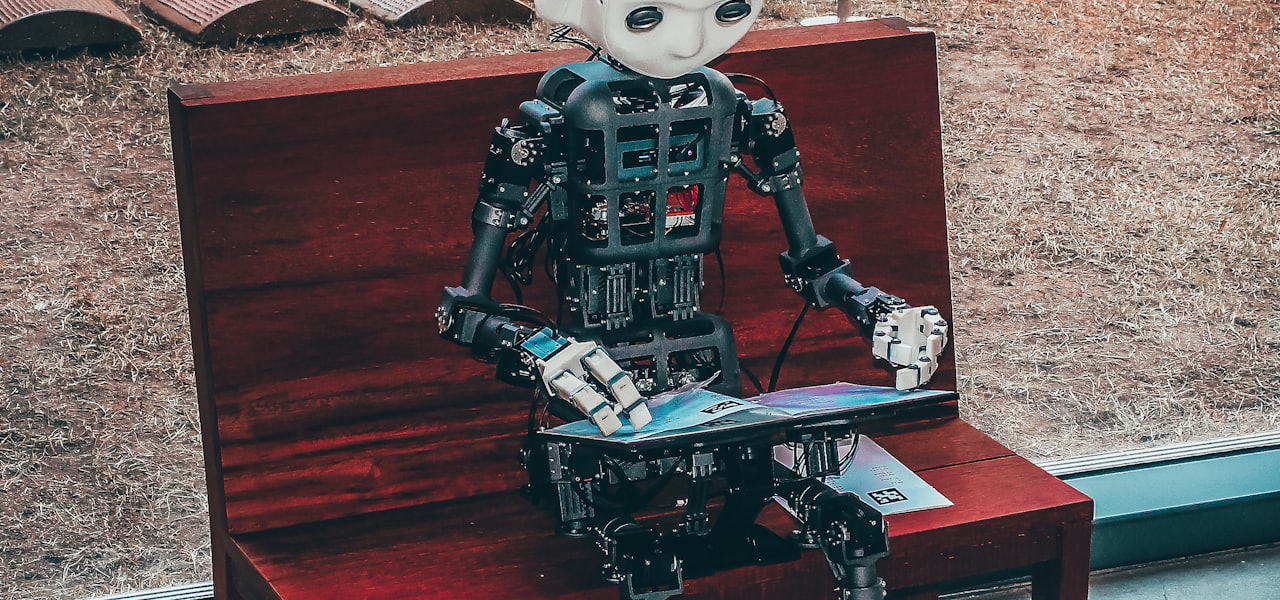
Curious about the best AI art generator? An AI art generator is software that uses machine learning to help you get more done — it combines speed, accuracy, and an interface that just works. Hands-on testing shows real-world results vary, so a short free trial is the smartest way to decide. Whether you are a beginner or a pro, the right AI art generator slots into your workflow and pays for itself fast. This guide breaks down the top picks, their pros and cons, and who each one is best for.
Game Jolt
Game Jolt is a social community platform for video games, gamers and content creators. Founded by Yaprak and David DeCarmine, it is available on iOS, Android, and on the web and as a desktop app for Windows and Linux. Users share interactive content through a variety of formats including images, videos, live streams, chat rooms, and virtual events. == Features == === Crowd streaming === In 2021 Game Jolt revealed their own live streaming feature called Firesides. Firesides allowed multiple users to simultaneously livestream together with nearly no delay. The feature launched with a virtual concert showcasing its ability to accommodate multiple streamers. On October 16, 2023, Firesides were removed from Game Jolt. === Mobile app === Game Jolt Social by Game Jolt Inc. launched on both the Apple App Store and Google Play Store in March 2022. "It's clear to us that Gen Z is tired of generic social media and they want a place specifically for gaming that supports all types of content they're creating–art, videos, thoughts, and livestreams all in one place." said Game Jolt founder and CEO Yaprak DeCarmine, in a statement to VentureBeat. === Game API === The Game Jolt Application Programming Interface (usually known as the Game Jolt Game API) allows any developer using a game development platform that supports HTTP operations and MD5 or SHA-1. Game Jolt advertises that the API can: Create multiple "scoreboards" which collect high scores from players made publicly available on the game's profile and give user accounts EXP Award player's trophies which give user accounts EXP Store game data on Game Jolt's data servers Log whether a user is currently playing a game they're logged into via the GJAPI == Game jams and competitions == Game Jolt regularly hosts game jams where participants are encouraged to develop games for a chance to win prizes. They hosted their first game jam in 2009, Shocking Contest. In November 2014, Game Jolt announced the "Indies vs PewDiePie" game jam, partnering with the popular YouTuber Felix "PewDiePie" Kjellberg. Developers were given a weekend (21–24 November) to create a game with the theme of "fun to play, fun to watch" to suit the Let's Plays entertainment style. Users could rate entries afterwards until December 1 when the scores were counted up. The prize to the top 10 rated games was Felix playing the games on his channel as a means of promotion for the developers, although later he played other entries. One of the participants of the jam, now known as Outerminds Inc. was discovered and hired by PewDiePie to develop his mobile game, Legend of the Brofist. Game Jolt partnered with Felix, Sean "Jacksepticeye" McLoughlin and Mark "Markiplier" Fischbach to host "Indies vs Gamers" in July 2015. The requirements for entries were arcade games using the Game Jolt Game API highscore tables, to be made between the July 17–20 and the top 5 games were played on the partner's YouTube channels. Following the "Indies vs PewDiePie" game jam in 2014, Game Jolt released their internal jam hosting tools public for all users to use as a service, to create their own game jams that integrated with the main site. Today, Game Jolt focuses on hosting and co-hosting game competitions with established brands in order to bring monetary and educational opportunities to their users. On April 15, 2024, an announcement was made about a collaboration with Pocket Worlds for the "HighRise Game Jam". Pocket Worlds had sold NFTs up until roughly 2022, causing a community outburst. The situation was addressed, and the situation started to disperse. == Contests == == Events == Game Jolt hosts both physical and virtual events to entertain and prank its users, which consists of the following: == History == Game Jolt has supported independent creators with a central platform to manage their content and communities since its start in 2003. David DeCarmine began development of Game Jolt at the age of 14 for a group of hobbyists, making games and sharing on forums in an early iteration known as Holo World. The original intention was to create a platform for gamers where new games could be discoverable and quickly playable, and where feedback could be provided directly to the creators, allowing them to continue improving their games. In 2008, Game Jolt was registered as an LLC, then incorporated as Game Jolt Inc. in September 2020. A new site launched in 2015 featuring a responsive design, automated curation for both games and game news articles which weighs how recent a game was uploaded and how popular it is ("hot") and filtering options on game listings for platform, maturity rating and development status. In March 2022, Game Jolt launched a mobile application simultaneously on the Google Play Store and Apple App Store targeted at Gen Z gamers and creators. While in beta, the mobile app had 100,000 installs pre-launch. === Game store === Game Jolt continues to host a large library of independent games. Game developers can upload their games directly to the site to share or sell. They would allow distribution for downloadable games, later adding support for Adobe Flash, Unity and Java games which allowed support for browser based games. In February 2013, Game Jolt built support for browser-based HTML5 games as well. A user levelling system was released into public beta in April 2013, incorporating the GJAPI trophies and highscores, as well as site activity, to generate 'EXP' (experience points). Game Jolt Jams released in early 2014 as a service to allow users to create their own game jams that integrated with the main site. In April 2016, an online marketplace was announced and released the following month with an exclusive set of game titles, including Bendy and the Ink Machine, allowing developers to sell their games on the site. In January 2016, Game Jolt released source code of the client and site's front end on GitHub under MIT license. In January 2022, Game Jolt banned adult games from appearing on the site, stating in an email to developers that the site had become a "social media platform" and they "had to make decisions around the direction and future of the brand which has now included the removal of hosted games with explicitly adult content." In response to a tweet by Itch.io saying the site is not for prudes, they wrote in their own tweet: "Game Jolt is a platform with a large audience of 13-16 year olds. Our users asked us to clean up, so here we are." == Investments == After bootstrapping Game Jolt with revenue earned from ads on the website for years, the DeCarmines secured venture capital in 2020 from SoftBank, doing so again in 2021 from founders of Twitch, Rec Room, Modio and more.
Cross-language information retrieval
Cross-language information retrieval (CLIR) is a subfield of information retrieval dealing with retrieving information written in a language different from the language of the user's query. The term "cross-language information retrieval" has many synonyms, of which the following are perhaps the most frequent: cross-lingual information retrieval, translingual information retrieval, multilingual information retrieval. The term "multilingual information retrieval" refers more generally both to technology for retrieval of multilingual collections and to technology which has been moved to handle material in one language to another. The term Multilingual Information Retrieval (MLIR) involves the study of systems that accept queries for information in various languages and return objects (text, and other media) of various languages, translated into the user's language. Cross-language information retrieval refers more specifically to the use case where users formulate their information need in one language and the system retrieves relevant documents in another. To do so, most CLIR systems use various translation techniques. CLIR techniques can be classified into different categories based on different translation resources: Dictionary-based CLIR techniques Parallel corpora based CLIR techniques Comparable corpora based CLIR techniques Machine translator based CLIR techniques CLIR systems have improved so much that the most accurate multi-lingual and cross-lingual adhoc information retrieval systems today are nearly as effective as monolingual systems. Other related information access tasks, such as media monitoring, information filtering and routing, sentiment analysis, and information extraction require more sophisticated models and typically more processing and analysis of the information items of interest. Much of that processing needs to be aware of the specifics of the target languages it is deployed in. Mostly, the various mechanisms of variation in human language pose coverage challenges for information retrieval systems: texts in a collection may treat a topic of interest but use terms or expressions which do not match the expression of information need given by the user. This can be true even in a mono-lingual case, but this is especially true in cross-lingual information retrieval, where users may know the target language only to some extent. The benefits of CLIR technology for users with poor to moderate competence in the target language has been found to be greater than for those who are fluent. Specific technologies in place for CLIR services include morphological analysis to handle inflection, decompounding or compound splitting to handle compound terms, and translations mechanisms to translate a query from one language to another. The first workshop on CLIR was held in Zürich during the SIGIR-96 conference. Workshops have been held yearly since 2000 at the meetings of the Cross Language Evaluation Forum (CLEF). Researchers also convene at the annual Text Retrieval Conference (TREC) to discuss their findings regarding different systems and methods of information retrieval, and the conference has served as a point of reference for the CLIR subfield. Early CLIR experiments were conducted at TREC-6, held at the National Institute of Standards and Technology (NIST) on November 19–21, 1997. Google Search had a cross-language search feature that was removed in 2013.
AppValley
AppValley is an independent American digital distribution service operated and trademarked by AppValley LLC. It serves as an alternative app store for the iOS mobile operating system, which allows users to download applications that are not available on the App Store, most commonly tweaked "++" apps, jailbreak apps, and apps including paid apps on the app store. == Legality == AppValley is among several services that violate enterprise developer certificates from Apple. The terms under which these are granted make clear that they are for companies who wish to distribute apps to their employees. AppValley uses these certificates to distribute software directly to non-employees, thereby bypassing the AppStore. AppValley's conduct had implications in U.S. sanctioned markets like Iran, Iraq, North Korea, Cuba, and Venezuela, which have all been subject to commercial sanctions. Among the software offered by AppValley and other services is pirated software, including paid apps on the app store and premium versions of Instagram, Spotify, Pokémon Go, and others. For instance, AppValley distributes an ad-free version of the music streaming app Spotify even on the free tier. == History == The website was founded in May 2017, releasing late that month with a very basic version of the app. There were less than 100 apps available for download at this time. On Jan 19, 2018, a new version dubbed AppValley 2.0 was released bringing dark mode, more categories, a search, and a much faster interface. On February 14, 2019, a Chinese partner "Jason Wu" allegedly took control of the main Twitter account and domain, causing the original AppValley developers to migrate to the domain app-valley.vip and the Twitter account handle @App_Valley_vip. As of September 2024, the app-valley.vip domain now redirects to appvalley.signulous.com. Today, AppValley continues to offer an alternative to Apple's App Store where app developers can publish their applications. == Features == AppValley is a mobile app installer which can also support iOS version that can be installed and downloaded on the mobile or the devices of the people who wish to get access to many different applications available. AppValley also contains apps that have been modified or tweaked for user preferences, and allows the user to by pass national restrictions on the use of apps, without having to resort to jailbreaking. As of June 2, 2020, there are over 1300 apps available for download.
Glossary of machine vision
The following are common definitions related to the machine vision field. General related fields Machine vision Computer vision Image processing Signal processing == 0-9 == 1394. FireWire is Apple Inc.'s brand name for the IEEE 1394 interface. It is also known as i.Link (Sony's name) or IEEE 1394 (although the 1394 standard also defines a backplane interface). It is a personal computer (and digital audio/digital video) serial bus interface standard, offering high-speed communications and isochronous real-time data services. 1D. One-dimensional. 2D computer graphics. The computer-based generation of digital images—mostly from two-dimensional models (such as 2D geometric models, text, and digital images) and by techniques specific to them. 3D computer graphics. 3D computer graphics are different from 2D computer graphics in that a three-dimensional representation of geometric data is stored in the computer for the purposes of performing calculations and rendering 2D images. Such images may be for later display or for real-time viewing. Despite these differences, 3D computer graphics rely on many of the same algorithms as 2D computer vector graphics in the wire frame model and 2D computer raster graphics in the final rendered display. In computer graphics software, the distinction between 2D and 3D is occasionally blurred; 2D applications may use 3D techniques to achieve effects such as lighting, and primarily 3D may use 2D rendering techniques. 3D scanner. This is a device that analyzes a real-world object or environment to collect data on its shape and possibly color. The collected data can then be used to construct digital, three dimensional models useful for a wide variety of applications. == A == Aberration. Optically, defocus refers to a translation along the optical axis away from the plane or surface of best focus. In general, defocus reduces the sharpness and contrast of the image. What should be sharp, high-contrast edges in a scene become gradual transitions. Algebraic distance or algebraic error. The algebraic distance from a point xi to a curve or surface defined by f ( x , β ) = 0 {\displaystyle f(x,\beta )=0} is the value of f ( x i , β ) {\displaystyle f(x_{i},\beta )} , i.e. the residual in the least squares problem with data point (xi, 0) and model function f. This term is mainly used in computer vision.[1][2] Aperture. In context of photography or machine vision, aperture refers to the diameter of the aperture stop of a photographic lens. The aperture stop can be adjusted to control the amount of light reaching the film or image sensor. aspect ratio (image). The aspect ratio of an image is its displayed width divided by its height (usually expressed as "x:y"). Angular resolution. Describes the resolving power of any image forming device such as an optical or radio telescope, a microscope, a camera, or an eye. Automated optical inspection. == B == Barcode. A barcode (also bar code) is a machine-readable representation of information in a visual format on a surface. Blob discovery. Inspecting an image for discrete blobs of connected pixels (e.g. a black hole in a grey object) as image landmarks. These blobs frequently represent optical targets for machining, robotic capture, or manufacturing failure. Bitmap. A raster graphics image, digital image, or bitmap, is a data file or structure representing a generally rectangular grid of pixels, or points of color, on a computer monitor, paper, or other display device. == C == Camera. A camera is a device used to take pictures, either singly or in sequence. A camera that takes pictures singly is sometimes called a photo camera to distinguish it from a video camera. Camera Link. Camera Link is a serial communication protocol designed for computer vision applications based on the National Semiconductor interface Channel-link. It was designed for the purpose of standardizing scientific and industrial video products including cameras, cables and frame grabbers. The standard is maintained and administered by the Automated Imaging Association, or AIA, the global machine vision industry's trade group. Charge-coupled device. A charge-coupled device (CCD) is a sensor for recording images, consisting of an integrated circuit containing an array of linked, or coupled, capacitors. CCD sensors and cameras tend to be more sensitive, less noisy, and more expensive than CMOS sensors and cameras. CIE 1931 Color Space. In the study of the perception of color, one of the first mathematically defined color spaces was the CIE XYZ color space (also known as CIE 1931 color space), created by the International Commission on Illumination (CIE) in 1931. CMOS. CMOS ("see-moss")stands for complementary metal-oxide semiconductor, is a major class of integrated circuits. CMOS imaging sensors for machine vision are cheaper than CCD sensors but more noisy. CoaXPress. CoaXPress (CXP) is an asymmetric high speed serial communication standard over coaxial cable. CoaXPress combines high speed image data, low speed camera control and power over a single coaxial cable. The standard is maintained by JIIA, the Japan Industrial Imaging Association. Color. The perception of the frequency (or wavelength) of light, and can be compared to how pitch (or a musical note) is the perception of the frequency or wavelength of sound. Color blindness. Also known as color vision deficiency, in humans is the inability to perceive differences between some or all colors that other people can distinguish Color temperature. "White light" is commonly described by its color temperature. A traditional incandescent light source's color temperature is determined by comparing its hue with a theoretical, heated black-body radiator. The lamp's color temperature is the temperature in kelvins at which the heated black-body radiator matches the hue of the lamp. Color vision. CV is the capacity of an organism or machine to distinguish objects based on the wavelengths (or frequencies) of the light they reflect or emit. computer vision. The study and application of methods which allow computers to "understand" image content. Contrast. In visual perception, contrast is the difference in visual properties that makes an object (or its representation in an image) distinguishable from other objects and the background. C-Mount. Standardized adapter for optical lenses on CCD - cameras. C-Mount lenses have a back focal distance 17.5 mm vs. 12.5 mm for "CS-mount" lenses. A C-Mount lens can be used on a CS-Mount camera through the use of a 5 mm extension adapter. C-mount is a 1" diameter, 32 threads per inch mounting thread (1"-32UN-2A.) CS-Mount. Same as C-Mount but the focal point is 5 mm shorter. A CS-Mount lens will not work on a C-Mount camera. CS-mount is a 1" diameter, 32 threads per inch mounting thread. == D == Data matrix. A two dimensional Barcode. Depth of field. In optics, particularly photography and machine vision, the depth of field (DOF) is the distance in front of and behind the subject which appears to be in focus. Depth perception. DP is the visual ability to perceive the world in three dimensions. It is a trait common to many higher animals. Depth perception allows the beholder to accurately gauge the distance to an object. Diaphragm. In optics, a diaphragm is a thin opaque structure with an opening (aperture) at its centre. The role of the diaphragm is to stop the passage of light, except for the light passing through the aperture. == E == Edge detection. ED marks the points in a digital image at which the luminous intensity changes sharply. It also marks the points of luminous intensity changes of an object or spatial-taxon silhouette. Electromagnetic interference. Radio Frequency Interference (RFI) is electromagnetic radiation which is emitted by electrical circuits carrying rapidly changing signals, as a by-product of their normal operation, and which causes unwanted signals (interference or noise) to be induced in other circuits. == F == FireWire. FireWire (also known as i. Link or IEEE 1394) is a personal computer (and digital audio/video) serial bus interface standard, offering high-speed communications. It is often used as an interface for industrial cameras. Fixed-pattern noise. Flat-field correction. Frame grabber. An electronic device that captures individual, digital still frames from an analog video signal or a digital video stream. Fringe Projection Technique. 3D data acquisition technique employing projector displaying fringe pattern on a surface of measured piece, and one or more cameras recording image(s). Field of view. The field of view (FOV) is the part which can be seen by the machine vision system at one moment. The field of view depends from the lens of the system and from the working distance between object and camera. Focus. An image, or image point or region, is said to be in focus if light from object points is converged about as well as possible in the image; conversely, it is out of focus if light is not w
VoxForge
VoxForge is a free speech corpus and acoustic model repository for open source speech recognition engines. VoxForge was set up to collect transcribed speech to create a free GPL speech corpus in order to be uses with open source speech recognition engines. The speech audio files will be 'compiled' into acoustic models for use with open source speech recognition engines such as Julius, ISIP, and Sphinx and HTK (note: HTK has distribution restrictions). VoxForge has used LibriVox as a source of audio data since 2007.
Image registration
Image registration is the process of transforming different sets of data into one coordinate system. Data may be multiple photographs, data from different sensors, times, depths, or viewpoints. It is used in computer vision, medical imaging, military automatic target recognition, and compiling and analyzing images and data from satellites. Registration is necessary in order to be able to compare or integrate the data obtained from these different measurements. == Algorithm classification == === Intensity-based vs feature-based === Image registration or image alignment algorithms can be classified into intensity-based and feature-based. One of the images is referred to as the target, fixed or sensed image and the others are referred to as the moving or source images. Image registration involves spatially transforming the source/moving image(s) to align with the target image. The reference frame in the target image is stationary, while the other datasets are transformed to match to the target. Intensity-based methods compare intensity patterns in images via correlation metrics, while feature-based methods find correspondence between image features such as points, lines, and contours. Intensity-based methods register entire images or sub-images. If sub-images are registered, centers of corresponding sub images are treated as corresponding feature points. Feature-based methods establish a correspondence between a number of especially distinct points in images. Knowing the correspondence between a number of points in images, a geometrical transformation is then determined to map the target image to the reference images, thereby establishing point-by-point correspondence between the reference and target images. Methods combining intensity-based and feature-based information have also been developed. === Transformation models === Image registration algorithms can also be classified according to the transformation models they use to relate the target image space to the reference image space. The first broad category of transformation models includes affine transformations, which include rotation, scaling, translation and shearing. Affine transformations are global in nature, thus, they cannot model local geometric differences between images. The second category of transformations allow 'elastic' or 'nonrigid' transformations. These transformations are capable of locally warping the target image to align with the reference image. Nonrigid transformations include radial basis functions (thin-plate or surface splines, multiquadrics, and compactly-supported transformations), physical continuum models (viscous fluids), and large deformation models (diffeomorphisms). Transformations are commonly described by a parametrization, where the model dictates the number of parameters. For instance, the translation of a full image can be described by a translation vector parameter. These models are called parametric models. Non-parametric models on the other hand, do not follow any parameterization, allowing each image element to be displaced arbitrarily. There are a number of programs that implement both estimation and application of a warp-field. It is a part of the SPM and AIR programs. === Transformations of coordinates via the law of function composition rather than addition === Alternatively, many advanced methods for spatial normalization are building on structure preserving transformations homeomorphisms and diffeomorphisms since they carry smooth submanifolds smoothly during transformation. Diffeomorphisms are generated in the modern field of Computational Anatomy based on flows since diffeomorphisms are not additive although they form a group, but a group under the law of function composition. For this reason, flows which generalize the ideas of additive groups allow for generating large deformations that preserve topology, providing 1-1 and onto transformations. Computational methods for generating such transformation are often called LDDMM which provide flows of diffeomorphisms as the main computational tool for connecting coordinate systems corresponding to the geodesic flows of Computational Anatomy. There are a number of programs which generate diffeomorphic transformations of coordinates via diffeomorphic mapping including MRI Studio and MRI Cloud.org === Spatial vs frequency domain methods === Spatial methods operate in the image domain, matching intensity patterns or features in images. Some of the feature matching algorithms are outgrowths of traditional techniques for performing manual image registration, in which an operator chooses corresponding control points (CP) in images. When the number of control points exceeds the minimum required to define the appropriate transformation model, iterative algorithms like RANSAC can be used to robustly estimate the parameters of a particular transformation type (e.g. affine) for registration of the images. Frequency-domain methods find the transformation parameters for registration of the images while working in the transform domain. Such methods work for simple transformations, such as translation, rotation, and scaling. Applying the phase correlation method to a pair of images produces a third image which contains a single peak. The location of this peak corresponds to the relative translation between the images. Unlike many spatial-domain algorithms, the phase correlation method is resilient to noise, occlusions, and other defects typical of medical or satellite images. Additionally, the phase correlation uses the fast Fourier transform to compute the cross-correlation between the two images, generally resulting in large performance gains. The method can be extended to determine rotation and scaling differences between two images by first converting the images to log-polar coordinates. Due to properties of the Fourier transform, the rotation and scaling parameters can be determined in a manner invariant to translation. === Single- vs multi-modality methods === Another classification can be made between single-modality and multi-modality methods. Single-modality methods tend to register images in the same modality acquired by the same scanner/sensor type, while multi-modality registration methods tended to register images acquired by different scanner/sensor types. Multi-modality registration methods are often used in medical imaging as images of a subject are frequently obtained from different scanners. Examples include registration of brain CT/MRI images or whole body PET/CT images for tumor localization, registration of contrast-enhanced CT images against non-contrast-enhanced CT images for segmentation of specific parts of the anatomy, and registration of ultrasound and CT images for prostate localization in radiotherapy. === Automatic vs interactive methods === Registration methods may be classified based on the level of automation they provide. Manual, interactive, semi-automatic, and automatic methods have been developed. Manual methods provide tools to align the images manually. Interactive methods reduce user bias by performing certain key operations automatically while still relying on the user to guide the registration. Semi-automatic methods perform more of the registration steps automatically but depend on the user to verify the correctness of a registration. Automatic methods do not allow any user interaction and perform all registration steps automatically. === Similarity measures for image registration === Image similarities are broadly used in medical imaging. An image similarity measure quantifies the degree of similarity between intensity patterns in two images. The choice of an image similarity measure depends on the modality of the images to be registered. Common examples of image similarity measures include cross-correlation, mutual information, sum of squared intensity differences, and ratio image uniformity. Mutual information and normalized mutual information are the most popular image similarity measures for registration of multimodality images. Cross-correlation, sum of squared intensity differences and ratio image uniformity are commonly used for registration of images in the same modality. Many new features have been derived for cost functions based on matching methods via large deformations have emerged in the field Computational Anatomy including Measure matching which are pointsets or landmarks without correspondence, Curve matching and Surface matching via mathematical currents and varifolds. == Uncertainty == There is a level of uncertainty associated with registering images that have any spatio-temporal differences. A confident registration with a measure of uncertainty is critical for many change detection applications such as medical diagnostics. In remote sensing applications where a digital image pixel may represent several kilometers of spatial distance (such as NASA's LANDSAT imagery), an uncertain image registration can mean that a solution could b